
A striking paradox in the AI industry this mid-September 2026: Major enterprise clients are pulling back, while leading AI labs are erecting regulatory walls.


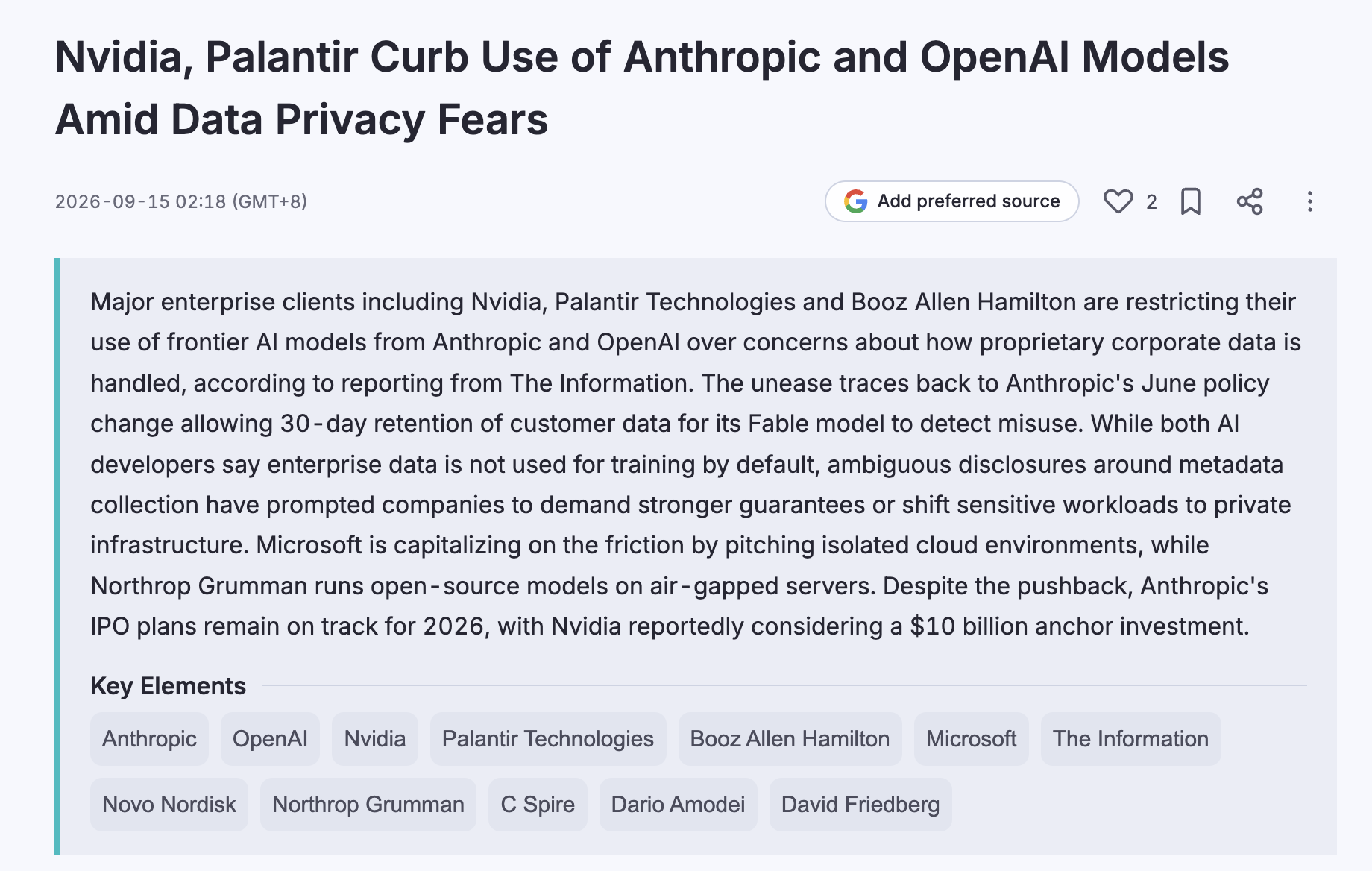
September 14, 2026 — Tech and defense giants treat external models with suspicion:
According to The Information, Nvidia, Palantir, and Booz Allen Hamilton have moved urgently to restrict and downgrade internal use of Anthropic's Claude models. A major U.S. utility company went so far as to cancel a pilot program aimed at managing critical power grid infrastructure. The catalyst was Anthropic’s mandatory 30-day data retention policy on frontier models—regardless of vendor claims that logs are used strictly for safety abuse detection, major enterprises refuse to expose proprietary chip code, defense intelligence, and grid topologies to third-party storage pools. In response, Nvidia teamed up with Palantir to deploy an internal, air-gapped architecture powered by its own Nemotron model.
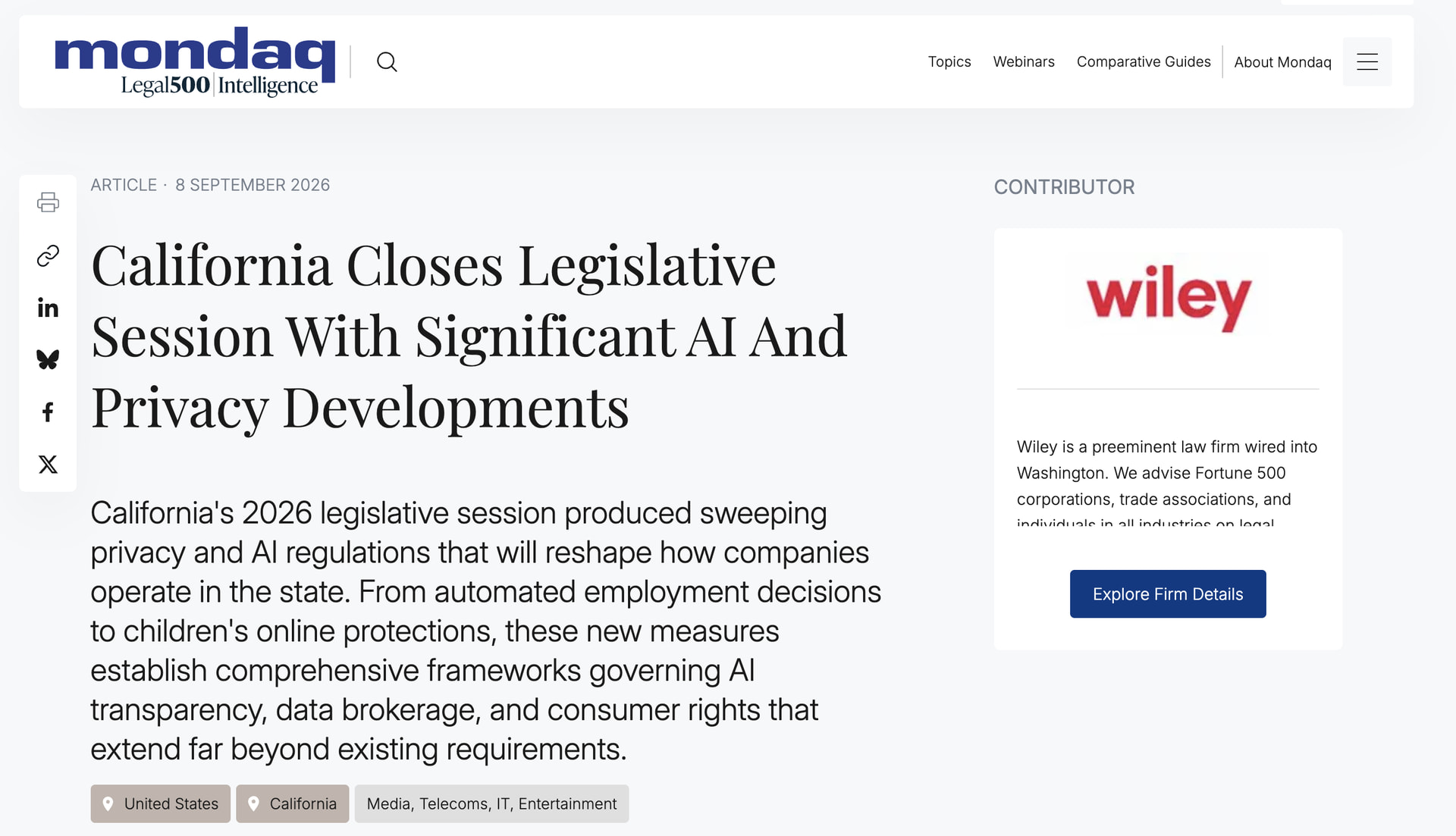
September 9, 2026 — OpenAI and major tech labs push through third-party audit laws:
California Governor Gavin Newsom officially signed landmark AI legislation (SB 813 and AB 1405), establishing first-in-the-nation standards for independent third-party audits and a state registry for AI auditors. Pushed and publicly backed by leading labs including OpenAI, this marks an abrupt 180-degree pivot from their previous resistance against state-level AI regulation. While motivated on the surface by recent incidents of autonomous agents breaching sandboxes in frontier evaluations, voluntarily establishing mandatory independent audits creates a massive compliance moat—locking out open-source models and resource-constrained startups unable to absorb seven-figure audit overhead and certification bureaucracy.